What Is Dimensional Color in Hair? Complete Guide for Beginners
Single-tone hair has a flatness that no cut can fully fix. It reads one note in every light and rarely moves the way naturally sun-kissed hair does. That's why dimensional hair color has become the standard for clients who want hair that actually looks alive. If you're booking your first color appointment or wondering why your current shade feels like it's missing something, this guide breaks down what dimensional color is, how it works, and why technique makes all the difference.
Table of Contents:
Dimensional color is a multi-tonal approach that uses two or more complementary shades to build depth, contrast, and visual movement. Unlike single-process color, which applies a uniform shade across the entire head, dimensional hair color layers lighter and darker shades in a way that interacts with light naturally.
Natural hair is never truly one color. Dimensional techniques replicate that variation deliberately, using strategic placement to give hair a richness that a solid color simply can't produce.
A dimensional color service typically combines the following:
A base color to anchor the overall look
Highlights or lighter shades to add brightness and lift
Lowlights or darker shades to create natural depth
A seamless blend between tones for a finished, natural result
The essential ingredient is contrast. When light hits hair with multiple tones, some sections catch it while others recede. That interplay creates the illusion of depth and movement. With all over color or a single-tone color, light reflects uniformly and flattens the appearance entirely.
Strategic placement refines the result. Face-framing pieces brighten the complexion. Root shadowing adds natural depth at the crown, mimicking how hair actually grows. Lighter pieces throughout the length create a sun-kissed effect without looking overdone.
Tone selection ties it together. Warm tones like honey, copper, and caramel catch light aggressively and produce a golden quality. Cool tones like ash and smoky brunette build contrast with more refined depth. Matching tones to skin tone and natural hair color is what separates a customized color plan from a generic one.
There's no single path to dimensional color. Colorists draw from multiple techniques depending on your hair's condition, natural base, and the result you're after.
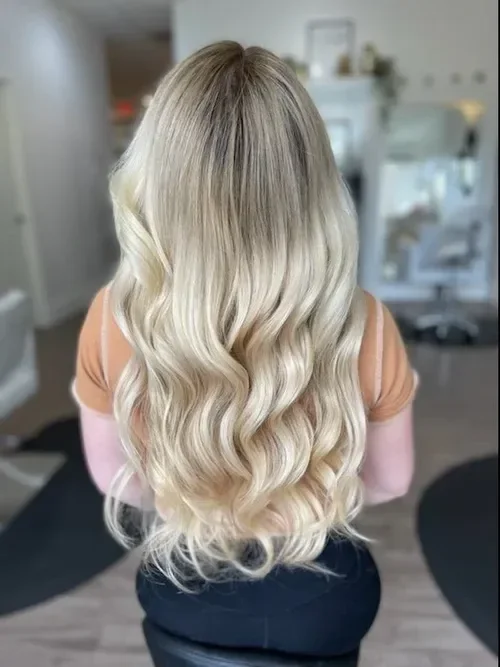
Balayage applies color freehand, creating soft transitions from darker roots to lighter ends. It grows out gradually with minimal harsh lines, making it one of the most low-maintenance options.
Foil highlights give the colorist control over exactly which sections lift and by how much. They're often paired with lowlights to build a balanced, multi-tonal result.
Color melting blends two or more shades at their transition points, eliminating obvious breaks between tones. It's particularly effective for smooth ombre effects or richly layered brunette hair.
Root shadowing applies a slightly darker shade at the base to add natural depth and soften the grow-out line, a practical way to maintain hair health between appointments.
Most advanced color services combine multiple techniques. The right mix depends on your hair and your goals.

Fine or thin hair gets a real visual boost. The contrast between lighter and darker shades creates the illusion of thickness that a single tone can't deliver. For clients who want both color and added volume, pairing a dimensional service with hair extensions in Atlanta can take results further.
Thick or naturally dark hair benefits from lighter pieces that create movement and keep the look from reading flat.
First-time color clients find dimensional color a natural entry point; it enhances rather than dramatically transforms.
Clients with existing color growing out can use dimensional techniques to blend old and new growth more gracefully than a single-process refresh would allow.
Waves and curls also see strong results. Color variation follows the hair's natural texture and amplifies movement.
One practical advantage of dimensional color is its softer grow-out. Because the technique intentionally blends light and dark tones, there's no single sharp line to expose as hair grows.
Touch-up frequency depends on the technique and contrast level. Balayage clients often go 10 to 16 weeks between appointments; foil highlight clients typically come in every 6 to 8 weeks.
Between visits, a sulfate-free shampoo helps preserve tone and extend vibrancy. UV protection limits fade from sun exposure, and a heat protectant before styling helps maintain hair integrity.
Box dye and at-home color kits rarely produce true dimensional results. Without color theory knowledge and precise placement, results tend to be flat or uneven rather than naturally layered. Over-highlighting is a related issue; too much lightness removes the contrast that makes dimensional color work.
Choosing tones without considering skin tone or natural hair color is another frequent misstep. A look that's stunning on one client can fall flat on another without that foundation. A professional consultation with a skilled hair color specialist in Atlanta ensures the plan is built around your hair, not just a trend.
Dimensional hair color is a multi-tonal approach that creates depth, movement, and natural beauty that flat, one-dimensional color can't replicate. Whether you're after something subtle and sun-kissed or rich and high-contrast, the result depends on skilled execution at every step.
Paired with a great haircut and styling service , dimensional color completes a look that moves and grows out beautifully. When you're ready to explore what it can do, our hair salon in Atlanta team is here to build something that fits your hair, your face, and your life. Book a consultation and start with a full assessment; your color should be as uniquely you as everything else about you.
-
Dimensional color uses two or more complementary shades layered through your hair to create depth and natural movement. Instead of a uniform shade, a colorist blends lighter and darker tones so hair looks naturally multi-tonal, the way hair does after real sun exposure.
-
Not exactly. Highlights are one component, but a full-dimensional color service combines highlights, lowlights, and a base color working together. Traditional highlights alone can read as flat without a darker shade to contrast them.
-
It depends on the technique. Balayage often lasts 10 to 16 weeks; foil highlights typically need a refresh every 6 to 8 weeks. The softer grow-out means most clients can go longer between appointments than they would with single-process color.
-
Yes. A colorist can lift targeted sections to add contrast and movement without lightening the entire head. Placement and lift level are tailored to your natural base and the result you want.
-
A sulfate-free shampoo, UV protection, and a heat protectant when styling are the essentials. Conditioning regularly keeps hair health strong, which directly affects how vibrant and dimensional the color looks between visits.